Corporate ground transportation is judged entirely by whether it is invisible. Nobody thanks you for a car that arrived on time. Everybody remembers the one that did not.
Here is what corporate transportation in Seattle actually involves, and what to look for when you are the person responsible for arranging it.
What corporate ground transportation covers
Executive airport transfers
The most common request and the one with the least tolerance for error. A visiting executive lands at Sea-Tac, and the difference between a tracked, pre-booked car and a rideshare queue is the difference between arriving composed and arriving late to a meeting they flew across the country for.
Flight tracking is the mechanism: the booking follows the flight number, so a delay moves the pickup automatically without anyone in your office having to notice. Details in meeting your chauffeur at Sea-Tac and airport transfer service.
Roadshows and multi-stop days
Investor roadshows, sales days, site visits, diligence tours — a full day of scheduled stops where the car stays with the group and waits between meetings.
These are booked hourly rather than per transfer, because the value is the vehicle standing by. A car that has been released and has to be re-summoned is a car that turns a four-minute buffer into a twenty-minute one.
Client entertainment
Dinners, games, concerts. The practical argument is straightforward: nobody from your side has to drive, nobody parks, and nobody is watching their drinking because they drew the short straw.
Conferences and offsites
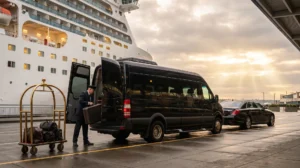
Moving a group between a hotel and a venue on a schedule. A luxury Sprinter van handles up to 14 at a time; larger groups run multiple vehicles on a loop. Capacity detail in the capacity guide.
Crew and project transportation
Longer-term contracts moving teams to and from sites on a repeating schedule — see the construction team quote form.
What separates corporate service from a consumer booking
Consistency
The same standard on the fortieth booking as on the first. For a repeating account this matters more than any single feature, because your reputation internally is attached to the average, not the best day.
Discretion
Chauffeurs working corporate accounts hear things. Professional conduct is not a nice-to-have when your CFO is on a call in the back seat.
Duty of care
If your company puts an employee or a client in a vehicle, you have taken on a responsibility. That means asking whether the operator carries commercial insurance, whether chauffeurs are background-checked employees rather than gig contractors, and whether vehicles are maintained on a schedule. Any operator worth using will answer these questions without hesitation — ours are on the about us page.
Single point of contact
An EA arranging six cars for a board meeting should not be placing six separate consumer bookings. Account clients get one contact and one consolidated invoice.
Vehicle selection for business travel
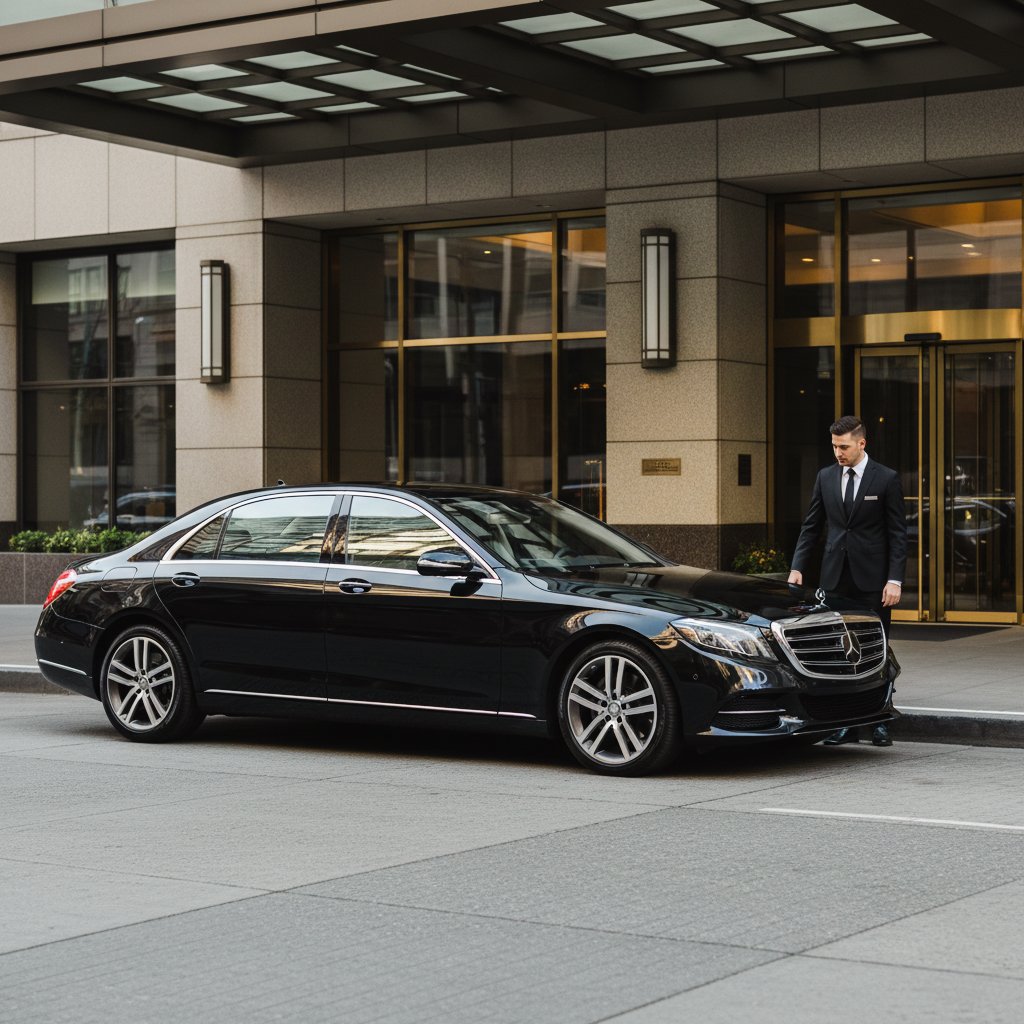
- Luxury sedan — one to three passengers. The default for individual executives. See luxury sedan service.
- Executive SUV — up to six, with luggage room. Good for small teams and for anyone carrying demo equipment. See SUV service.
- Luxury Sprinter van — up to 14, keeps a team together and allows conversation en route. Frequently the most cost-effective option for groups above four.
If you are weighing chauffeured against a rental for a multi-day offsite, we cover that honestly in chauffeured Sprinter van vs. rental.
Setting up an account
Corporate accounts typically cover:
- Consolidated monthly invoicing rather than per-trip payment
- Cost centre or project code tagging for internal recharge
- Pre-agreed rates for recurring routes such as office to Sea-Tac
- Named contacts authorised to book on the company’s behalf
To set one up, get in touch through the contact page.
Booking well: four practical notes
- Give the flight number, not the arrival time. It is what allows tracking to work.
- Book the roadshow as a block, not as separate transfers. It costs less and it removes every gap where something can go wrong.
- Name the passenger. Chauffeurs greeting a named executive present better than chauffeurs greeting a booking reference.
- Tell us about the schedule’s pressure points — the meeting that cannot slip, the flight that must be caught. We plan around them.
Set up a corporate account
One contact, one invoice, consistent service. Get in touch or see chauffeur service in Seattle.