
Sprinter Van Service in Seattle for Groups of 7 to 14
One Mercedes-Benz Sprinter high-roof van, up to 14 seats, and a straight answer on how many bags travel with them. Airport runs, hotel-to-venue legs, conference shuttle loops and multi-day roadshows.
*all bookings include a professional chauffeur.

Rated 5 Stars from 499 Google Reviews
Tell us headcount, bags and number of legs
TESTIMONIALS
Rated 5 Stars from 499 Google Reviews
We’re thrilled to see so many satisfied customers choosing Kamo Limo. Will you be next?
EXCELLENT Based on 505 reviews
 Posted on Google
 Britt BrouwerWe used Kamo Limo this week for round-trip transfers from Mill Creek to Pier 66 (cruise terminal) in downtown Seattle. I asked several companies for quotes and Kamo gave a great price for six adults and lots of luggage. Sam is very responsive and helpful. Our driver today was Stanley and he was professional, on time, a safe driver, very good at communicating and just an all-around nice guy. I actually just found this company on Google, but I’m glad I did and I will definitely be using them going forward. We were in a Suburban XL that was immaculate and very comfortable.Posted on Google
 Mike AndersonGreat experiencePosted on Google
 Mark ConverseFirst rate experience all around. Great driver. Safe, helpful and informative. Definitely will be first choice when in SeattlePosted on Google
 JT VanceDrivers were pleasant, on time, helpful, and drove us safely to the cruise ship. Everything was done professionally and well!Posted on Google
 Debra MarksHad 2 drivers while visiting Seattle prior to and after a cruise. Eugene and Stanley were excellent drivers and very professional. Thanks to them both for an excellent and memorable experience for transportation and sight-seeing.Posted on Google
 Becky StephensKamo Limo was OUTSTANDING. Drivers were timely, very friendly and helpful. Highly recommend.Posted on Google
 Lynn BaughcumWe used Kamo Limo for family of 8. Three shuttle trips in Seattle, from airport to hotel, hotel to cruise ship and from cruise ship to airport. Service was excellent. Communication great from start to finish, on time (actually a few minutes early). Drivers were very professional and friendly. Highly recommend!!!!Posted on Google
 Steve BravemanKamo Limo is THE BEST. We arranged for transport from Seattle to the pier and then a pick up at the pier on our return from an Alaskan cruise. George was the driver on both trips and is a true professional. His personality, knowledge and being on time made our trip complete. I would highly recommend this company if you need transportation in Seattle. The vehicles were spotless and were very comfortable since there was 10 of us. GREAT COMPANYPosted on Google
 DONNA THOMASMr Cowherd picked us up early and dropped us off at the airport. He was very polite and was a great driver. I recommend anyone needing a car service in the Seattle area to use the Kamo Limo Car Service. They were perfect.
VEHICLES FOR EVERY TRIP
Choose Your Vehicle

COUNTING SEATS AND BAGS
“Fourteen seats and fourteen large suitcases are two different bookings, and the difference is worth five minutes on the phone before anyone commits.”
Group bookings fail at the counting stage, not on the road. We would rather ask about hard-shell cases, ski bags and instrument cases now than watch a chauffeur solve a luggage puzzle at a hotel door with fourteen people waiting in the rain. Send the numbers and we will tell you whether one van does it.

Seats and bags both counted
Fourteen is the seat count. The bay behind the last row is a separate limit, so we ask for bag count and bag type before we quote rather than after. If your numbers need a second vehicle, you get that in writing at quote stage instead of at the curb.

Same van, same chauffeur
On a conference block or an offsite, one vehicle and one chauffeur stay with the group across the day. Your people learn one van and one phone number instead of identifying a different vehicle every leg. Repeat legs are booked as a single block off your agenda.

High roof, faster boarding
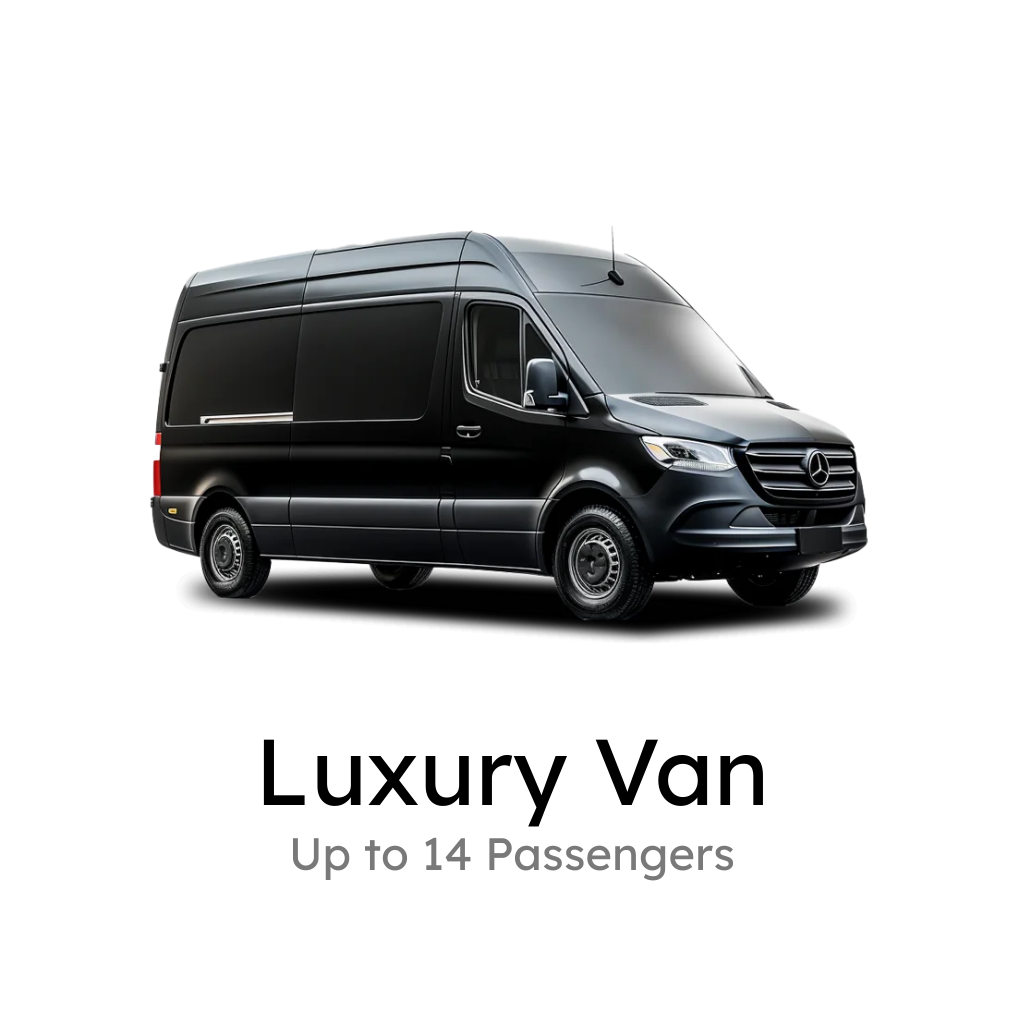
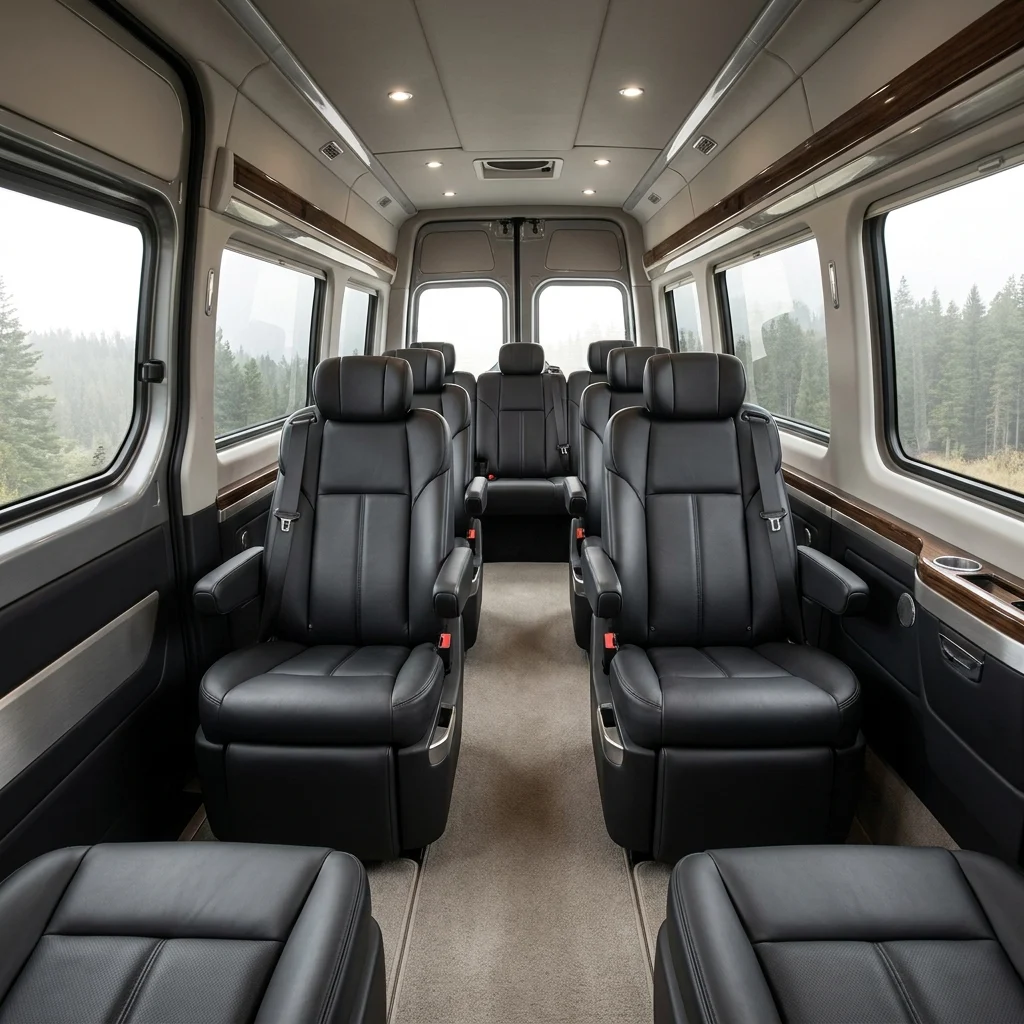
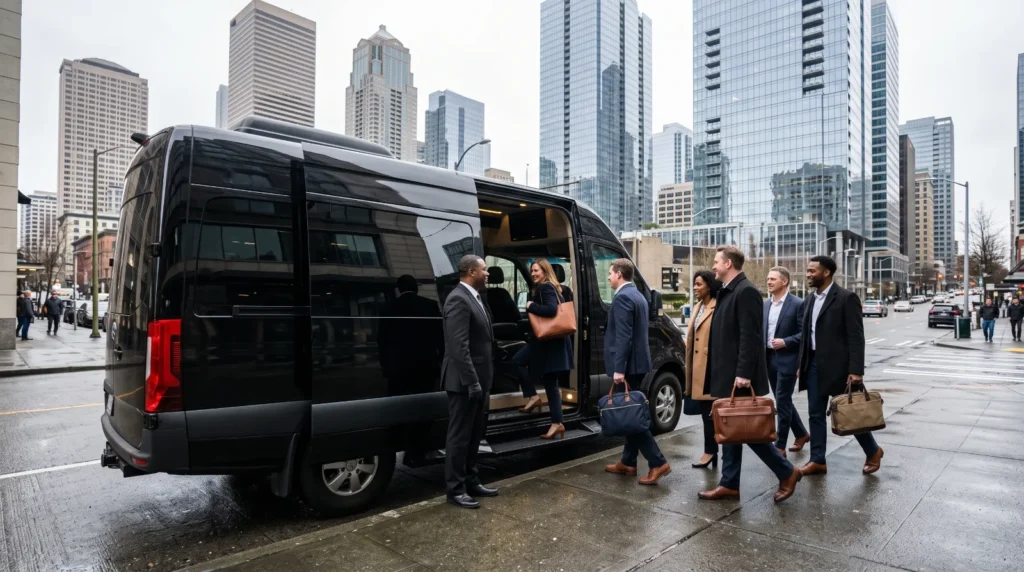
The high-roof body lets most adults walk the aisle upright, so fourteen people sit down without crouching or climbing over a row. At a hotel door in the rain that is minutes off every pickup. Across a shuttle day that runs four or five legs, those minutes are the schedule.
ABOUT KAMO LIMO
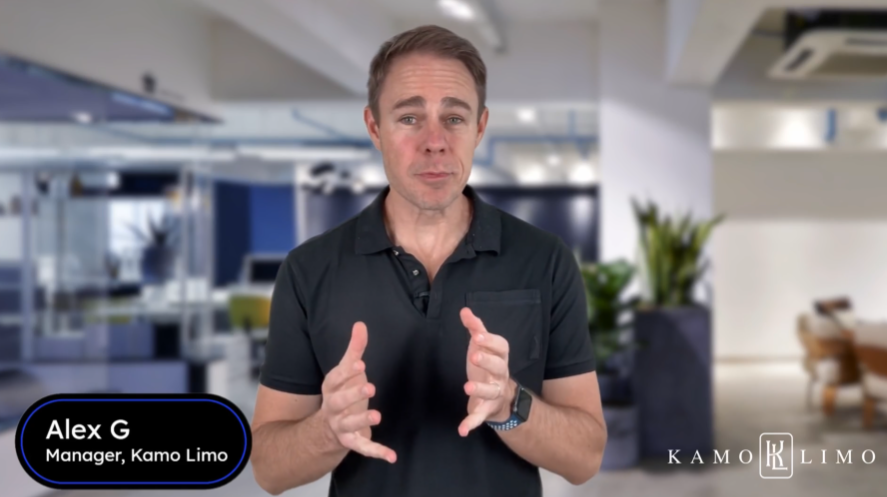
Who is actually moving your group
Kamo Limo has run chauffeured transport in the Seattle area for ten years, with 499 five-star Google reviews and dispatch staffed 24 hours a day. Moving a group is a different job from a single executive pickup, and this page is written for the person who got handed it.
That person is usually a conference organiser, a team lead, an executive assistant, a reunion planner or a tour host. You are not shopping for luxury. You are counting seats, counting bags, working out whether one vehicle covers the party, and trying not to be the reason fourteen people are standing outside a hotel at 6:40 in the morning.
So this page gives you the figures we size jobs with: how many bags realistically travel with a full van, where the second vehicle becomes unavoidable, which Seattle pickup points a high-roof van cannot enter, and what a repeat shuttle loop looks like across a working day. Alex G and the dispatch team confirm every figure in writing before you book.
Alex G
Manager of Kamo Limo
Sprinter van service in Seattle moves a group of 7 to 14 in one chauffeured vehicle
Kamo Limo runs Mercedes-Benz Sprinter high-roof vans in Seattle for groups of seven to fourteen passengers. One vehicle covers airport runs, hotel-to-venue legs, conference shuttle loops and multi-day roadshows. The luggage bay fills before the seats do, so headcount and bag count are both confirmed in writing on your quote. Dispatch is staffed 24 hours.
Sprinter van service means one chauffeured Mercedes-Benz Sprinter high-roof van, seating up to 14 passengers, booked either as a point-to-point transfer or as a block of time covering several legs in a day. One chauffeur holds the whole itinerary, so nobody in your group is coordinating separate vehicles by text message.
- Airport runs for a team or family arriving at SEA, including a party landing on two or three different flights.
- Hotel-to-venue legs for conferences, offsites and training days in downtown Seattle, South Lake Union and on the Eastside.
- Repeat shuttle loops across a multi-day event, where the same van runs the same route several times a day.
- Executive roadshows with a fixed agenda, several stops and no time to re-book between them.
- Family reunions and multi-generation groups who want everyone in one vehicle instead of a convoy.
Under seven passengers, a Chevrolet Suburban, Cadillac Escalade or GMC Yukon loads faster and costs less. Over fourteen, we dispatch more than one vehicle on one itinerary. Both cases are sized further down this page.
A Sprinter high-roof van seats up to 14, an SUV up to 6 and a sedan up to 3
Seats are a fixed number. Bags are a judgement call, so the figures below are planning guidance that we check against your actual bag list before you book.
| Vehicle | Passengers | Bags to plan on | Best for |
|---|---|---|---|
| Mercedes-Benz Sprinter high-roof van | Up to 14 | Rear luggage bay behind the last row. Comfortable for a checked bag and a carry-on each at seven to nine passengers; tight at thirteen or fourteen with large checked bags | Groups of seven to fourteen travelling as one party, shuttle loops, roadshows, reunions |
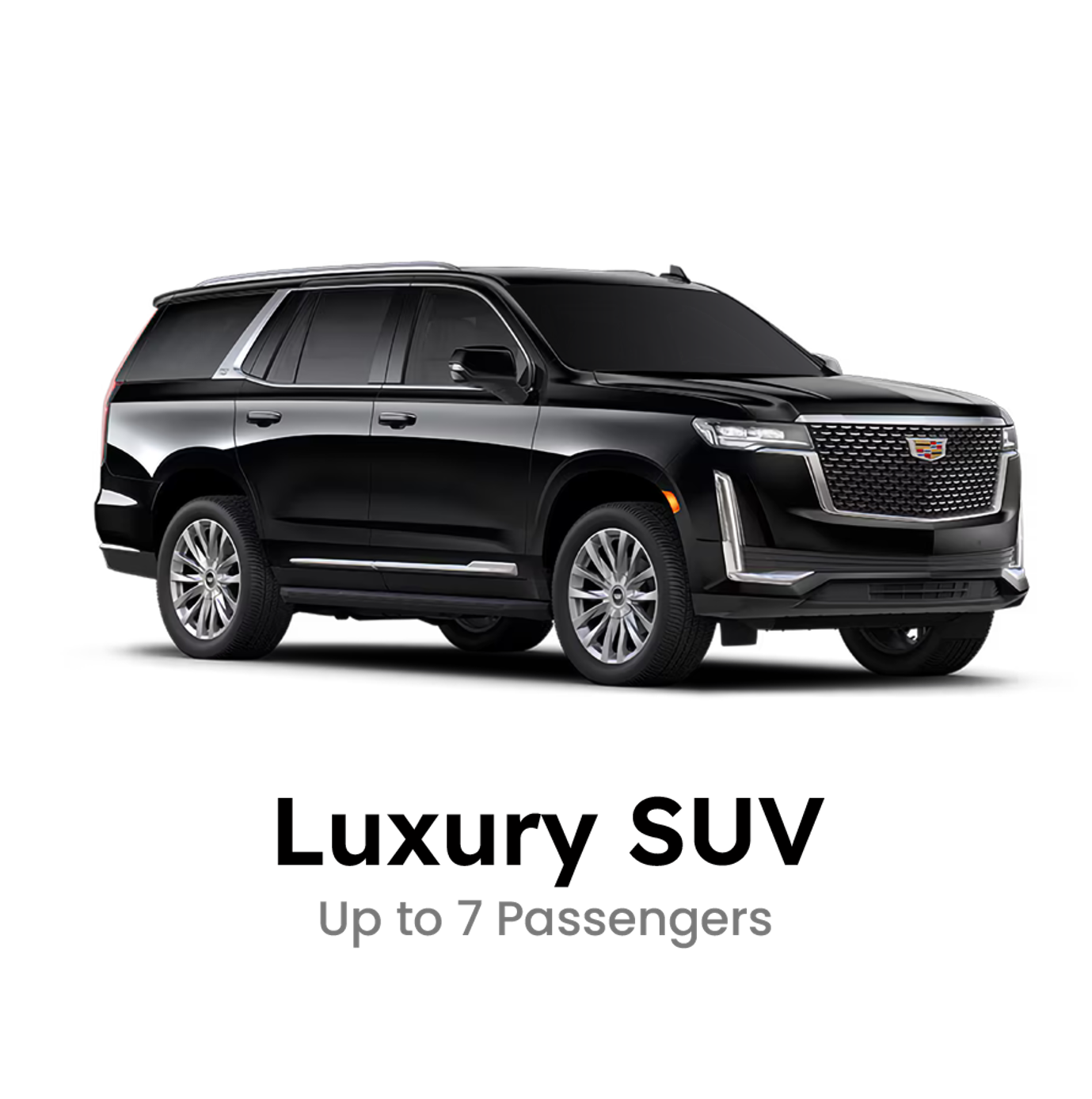
| Chevrolet Suburban (black), Cadillac Escalade, GMC Yukon | Up to 6 | Cargo area behind the third row, with the option of folding a row for bag-heavy trips | Small teams, executive pairs, bag-heavy trips, second vehicle alongside the van |
| Mercedes-Benz S560, Cadillac XTS, Lexus LS, Lincoln Continental | Up to 3 | Trunk only | One or two travellers moving separately from the main group, late departures, early scouting runs |
The passenger ladder we size a job with
- 7 to 9 passengers: one van, a checked bag and a carry-on each, no discussion needed.
- 10 to 12 passengers: one van still works with standard-size bags. Hard-shell cases and oversized bags start to tighten it.
- 13 to 14 passengers: the seats are fine and the bay is the constraint. A large checked bag each usually means a second vehicle or a separate bag run.
- 15 or more passengers: more than one vehicle, dispatched together on the same itinerary.
Tell us which rung you are on and we will confirm the vehicle count in writing before anything is booked.
Why fourteen seats does not mean fourteen large suitcases
This is the part that decides whether your morning runs on time, and it is the part most quote pages leave out.
The luggage bay is a separate budget from the seats
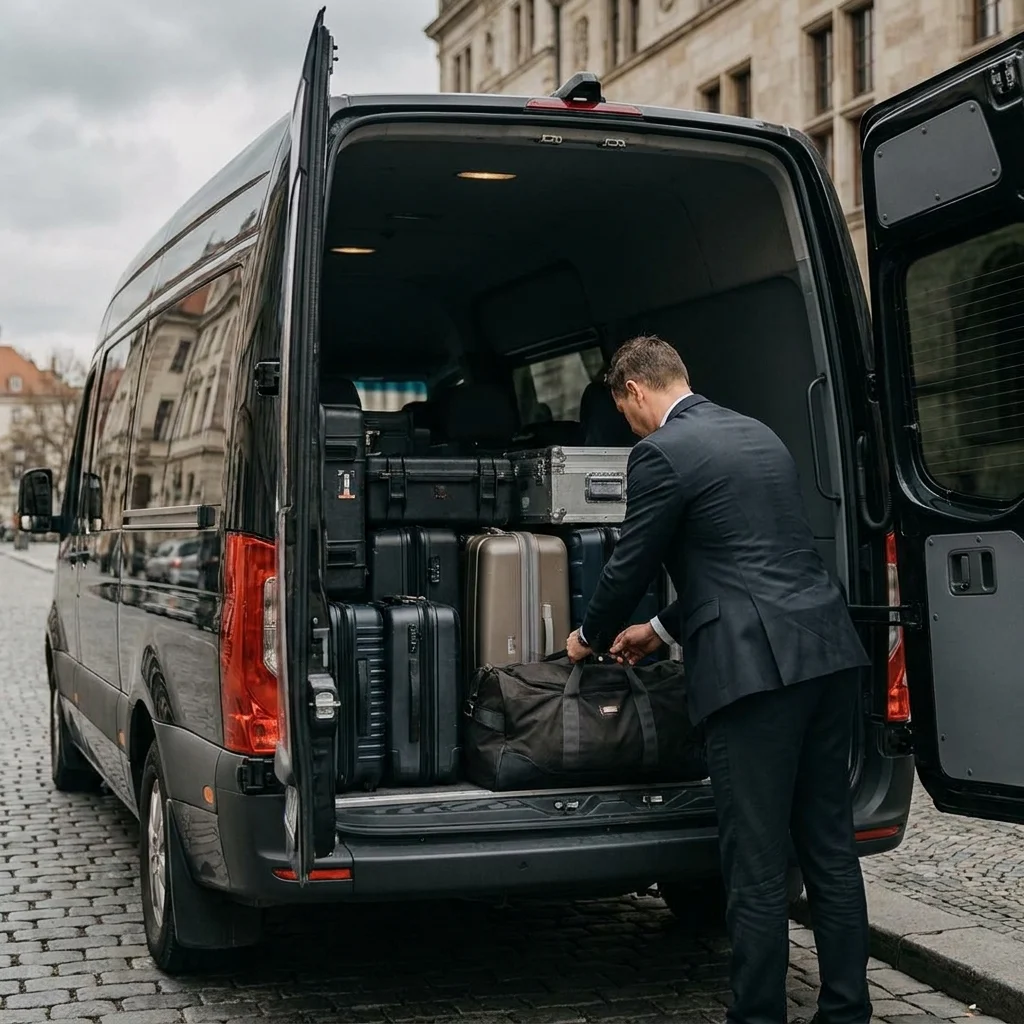
With all 14 seats occupied nothing folds down. Everything travels in the bay behind the last row, plus whatever passengers keep at their feet. Soft-sided bags compress and stack. Hard-shell cases do not, so a group flying with rigid four-wheel cases loses bay space that a group with duffels keeps. That is why we ask for bag types, not just a total.
Long items such as ski and snowboard bags, hockey sticks or a lighting stand take the length of the bay and effectively remove the rest of it. Trade-show cases and instrument cases count as more than one suitcase each. We do not tow a luggage trailer, so overflow travels in a second vehicle. Flag bag-heavy groups at quote stage and we price the split then, rather than solving it at a hotel door on the day.
Standing headroom is a loading feature, not a luxury feature
The high-roof body lets most adults move down the aisle upright. On a group run that shows up as time: fourteen people find seats faster when nobody is crouching, grandparents are not climbing over a folded row, and the chauffeur can pass a bag forward without unloading half the van to reach it.
Where a high-roof van can and cannot pull in
A high-roof Sprinter does not clear the height bars posted at most downtown Seattle parking garages, hotel under-building entrances and airport garage decks, so it cannot follow a sedan inside. Group pickups happen at street level, in a loading zone or at the main entrance. That is routine. The only thing that goes wrong is nobody telling the group which door.
The Seattle Convention Center is the example worth copying into your own run sheet. The Arch building at 705 Pike Street and the Summit building at 900 Pine Street are separate buildings, and a delegate told to meet at the convention center can end up at the wrong one. Put the building name and the street address on the itinerary, confirm the loading zone with the venue in the week of the event, and give your group a street corner rather than a building name.
When two SUVs beat one Sprinter, and when the reverse is true
| What you care about | One Sprinter, up to 14 | Two SUVs, up to 6 each |
|---|---|---|
| Group size that suits it | 7 to 14 travelling as one party | 7 to 12, especially if the group naturally splits |
| Luggage per person | Constrained at full load, generous at 7 to 9 | Generous, and a row can fold for bag-heavy trips |
| Staying together | Everyone in one vehicle, one briefing, one arrival | Group splits, two arrival times at the same door |
| Boarding and curb space | One loading zone slot, one door | Two slots, which is harder on a narrow downtown street |
| People to coordinate | One chauffeur, one phone number | Two chauffeurs to keep in convoy |
| Splitting up later | Poor, the group is committed to one van | Good, one vehicle can leave early |
Rule of thumb: if the group must arrive as one party, take the van. If the luggage is the hard part, or half the group leaves at ten and half at midnight, take two SUVs.
What actually goes wrong on a group day
Sessions run long. One flight lands late while the rest of the party is already at the curb. A venue moves its loading zone the week of the event. Two people are added on the morning of the run. None of that is unusual, and all of it is handled by telling dispatch, staffed 24 hours, as early as you know. Any change that moves the price is confirmed in writing before it is applied, so nothing is negotiated at the door with a group watching.
Two habits save more group runs than anything else. Build a buffer at every stop, because loading fourteen people with bags takes longer than a planner assumes. And respect the peak: SR-520 and I-90 carry the entire Eastside commute, so a downtown-to-Redmond leg that is straightforward mid-morning can take roughly twice as long in the afternoon.
Sprinter van service in Seattle is estimated at $175 to $340 per leg by trip type
These figures are competitor-derived estimates for planning, not confirmed prices. Every figure below is an estimate – final price confirmed in writing before you book.
| Trip type | Vehicle | Estimated range | Notes |
|---|---|---|---|
| SEA Airport to downtown Seattle hotel, one way | Sprinter, up to 14 | $175 – $210 | Curbside pickup is standard; meet-and-greet inside the terminal is a paid add-on |
| SEA Airport to Bellevue, Redmond or Kirkland, one way | Sprinter, up to 14 | $180 – $225 | Cross-lake distance and peak traffic move the figure |
| Downtown Seattle to an Eastside campus, one way | Sprinter, up to 14 | $260 – $340 | SR-520 or I-90 depending on time of day |
| Hotel to downtown venue, single leg | Sprinter, up to 14 | $195 – $265 | Short leg; most groups book several of these as one block instead |
| Repeat shuttle loop, several legs in one day | Sprinter, up to 14 | Quoted as a continuous block | Quoted as time rather than per leg, on our hourly rates page |
| Multi-day conference or roadshow | Sprinter, or van plus SUV | Block per day, quoted from your itinerary | Send the draft agenda with addresses, even if the times are still moving |
| Second vehicle for overflow bags or passengers | Suburban, Escalade or Yukon | Quoted alongside the van | Dispatched on the same itinerary so both arrive together |
Published charges that apply to every group booking
- A 9% service surcharge is added to the base fare, trips between 11:00 PM and 5:00 AM carry a $15 late-night surcharge, and public holidays carry a separate $30 surcharge.
- Gratuity is not included. 20% is recommended and it is at the customer’s discretion.
- Serving military personnel receive 5% off base fares of $75 or more.
- Standard airport pickup is curbside. Meet-and-greet inside the terminal is a paid add-on.
All ranges above are an estimate – final price confirmed in writing before you book.
Four sample Seattle group days: conference shuttle, roadshow, airport reunion and a team with gear
Example schedules, built the way we plan them. Times are illustrative; yours come from your agenda.
1. Conference shuttle day, downtown hotel block to the Seattle Convention Center
| Time | Leg | Planning note |
|---|---|---|
| 7:40 AM | Hotel entrance to the Summit building, 900 Pine Street | Put the street address on the itinerary; two convention center buildings share one name |
| 12:30 PM | Venue to an offsite lunch, return leg after | The van holds at street level rather than entering a garage it cannot clear |
| 6:15 PM | Venue to a Pioneer Square or Belltown dinner | Short leg, long dwell; booked inside the block |
| 9:30 PM | Dinner back to the hotel block | Late runs are the ones that slip; dispatch is staffed 24 hours |
2. Two-day executive roadshow
- Day 1 morning: SEA arrival, curbside pickup, straight to a downtown Seattle hotel.
- Day 1: three downtown and South Lake Union meetings with the van staying with the team between stops, so laptops and coats never leave the vehicle.
- Day 2 morning: across SR-520 to Redmond, then south to Bellevue. Leave earlier than feels necessary; the bridge decides the day.
- Day 2 evening: Bellevue to SEA for an evening departure, with bags loaded at the last meeting rather than routed back through the hotel.
3. Family reunion arrival day at SEA
- Two flights landing roughly ninety minutes apart, twelve people in total.
- Option A: one van, one staged pickup, with the earlier arrivals waiting inside the terminal.
- Option B: the van plus a Suburban, so the first group leaves immediately. Usually the better call with small children or a lot of checked bags.
- On to a rental house or hotel, with the grocery stop written into the itinerary rather than added on the day.
4. Team travelling with equipment
- Sports squad, choir or demo team with cases: gear is loaded first, passengers second.
- Anything longer than about six feet is flagged at quote stage, because it usually decides the second vehicle.
- Legs across a weekend are booked as one block, so the same chauffeur already knows which door the gear goes through.
A group van booking includes the chauffeur and curbside airport pickup; gratuity and meet-and-greet cost extra
Group bookings go wrong on assumptions, so here is the split in plain terms.
| Item | Status |
|---|---|
| Chauffeur and the Mercedes-Benz Sprinter high-roof van for your booked time | Included in the quoted fare |
| Standard airport pickup at the curb | Included |
| Meet-and-greet inside the terminal | Paid add-on, request it when you book |
| Gratuity | Not included. 20% recommended, at the customer’s discretion |
| Service surcharge | 9% added to the base fare |
| 11:00 PM to 5:00 AM trips | $15 late-night surcharge |
| Public holidays | $30 surcharge (separate line) |
| Serving military, on base fares of $75 or more | 5% discount |
| Extra stops added after the itinerary is confirmed | Priced and confirmed in writing before they are applied |
| A second vehicle for overflow passengers or bags | Quoted separately and dispatched on the same itinerary |
| Tolls, parking and venue access charges where they apply | Set out in your written quote |
| Luggage trailer | Not offered. Overflow travels in a second vehicle |
If an item is not on this list, ask before you book and the answer goes in writing. Every rate figure on this page is an estimate – final price confirmed in writing before you book.
See the Sprinter van loaded, boarding and on the road before you commit a group to it
Photographs of the vehicle you would actually be booking, in the situations this work involves.
- The passenger area, showing the seat rows and the aisle you can walk down upright.
- The rear luggage bay loaded, which is the clearest picture of what sits behind the last row.
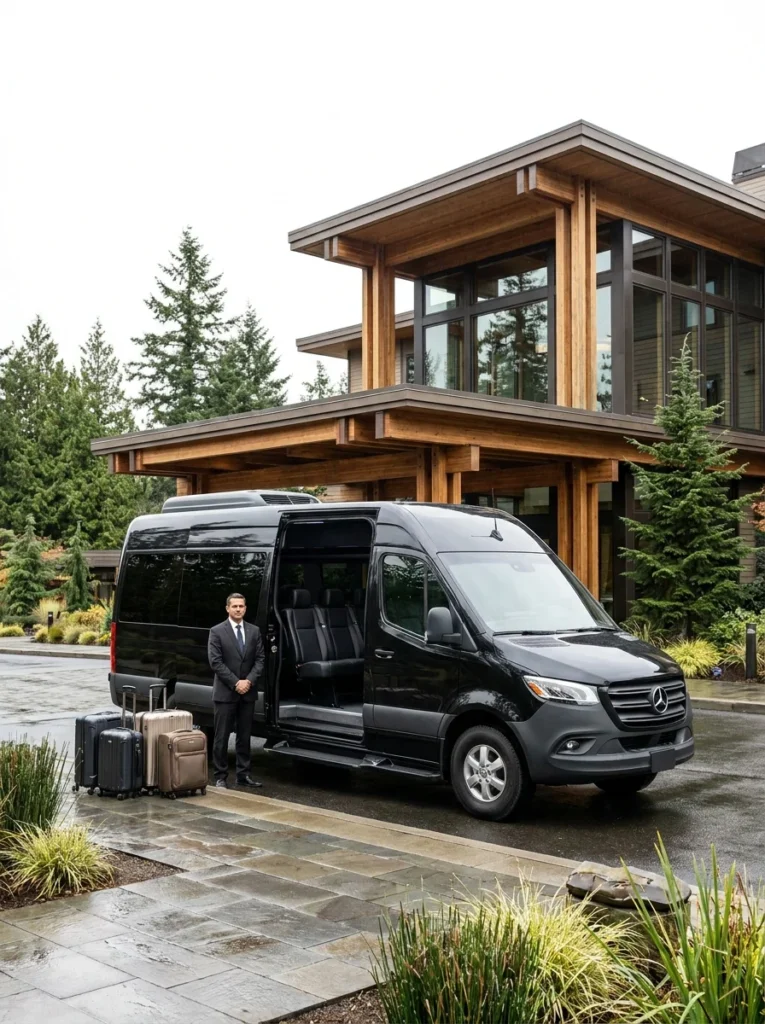
- A pickup at a building entrance with bags staged at the sliding door, the way a group boards at street level.
- The van on the highway, on the kind of cross-town or cross-lake transfer most of these bookings are.
If a specific loading question is not answered by the photographs, call 844-848-4442 and describe the bags.
Related Kamo Limo pages for airport, hourly and Eastside group trips
- Seattle airport car service for SEA terminal procedure, curbside pickup and the meet-and-greet add-on.
- Hourly rates if your day is a continuous block rather than separate legs.
- Bellevue, Redmond and Kirkland for Eastside pickup points and local timings.
- Tacoma and Everett for groups travelling from the south or north ends.
- Seattle cruise port transportation for sailing-day group transfers with full luggage loads, and the Pier 91 and Pier 66 terminal pages.
- Luxury limo, sedan and Sprinter service for the full fleet overview.
THE POWER OF KAMO LIMO
Group runs we cover across the Seattle area
Downtown Seattle, South Lake Union, Bellevue, Redmond, Kirkland, SEA Airport, Woodinville, hotel-to-venue loops, conference shuttles, multi-day roadshows and family reunion arrivals.

Fixed Rates
Quoted before you book and confirmed in writing. What we quote is what you pay, barring changes you ask for on the day.

Flight Tracked
Every booking is matched to your flight number and monitored from three hours out, so a delay moves the car, not your fare.

24/7 Dispatch
Red-eye landings and 5am departures are normal here. Someone always answers.
Common questions
How many passengers fit in a Sprinter van in Seattle?
+
The Mercedes-Benz Sprinter high-roof van seats up to 14 passengers, and that is passengers, not a figure with the chauffeur seat counted in. Groups of seven to fourteen travel in one vehicle. Below seven, a Chevrolet Suburban, Cadillac Escalade or GMC Yukon loads faster and costs less. Above fourteen we dispatch more than one vehicle on the same itinerary rather than squeezing the group in.
How much luggage fits in a 14 passenger van?
+
Less than fourteen large checked bags. With every seat filled, luggage lives in the bay behind the last row and nothing folds down, so the bay is the limit. Seven to nine passengers can each bring a checked bag and a carry-on comfortably. At thirteen or fourteen passengers with a large case each, plan on a second vehicle or a separate bag run. Send the bag count and types and we size it before you pay anything.
Is one Sprinter van better than two SUVs for a Seattle group?
+
One Sprinter is better when the group must stay together, talk on the way and arrive as one party at a single door. Two SUVs are better when the luggage is heavy, when half the group leaves early, or when only one loading zone slot is available and the group can split. Twelve people with twelve large suitcases fit two SUVs more easily than one van.
Can you stand up inside the Sprinter van?
+
Yes. The high-roof body lets most adults walk down the aisle upright instead of crouching along the seats. That matters more than it sounds when older relatives are boarding, when someone has the middle seat of the back row, or when fourteen people load in the rain at a hotel entrance. Boarding is quicker because nobody is bent over or climbing across a row to reach a seat.
How much does Sprinter van service in Seattle cost?
+
Plan on roughly $175 to $210 for a one-way SEA to downtown Seattle transfer in the Sprinter, and roughly $180 to $225 across the lake to Bellevue, Redmond or Kirkland. Both figures are an estimate – final price confirmed in writing before you book. A full event day is quoted as a continuous block on our hourly rates page rather than leg by leg, and gratuity is not included.
Can you run repeat shuttle loops between a hotel and a venue?
+
Yes, repeat loops are one of the main jobs this van does. A common pattern is a morning run from the hotel block to the venue, one or two midday legs, then an evening dinner run, all inside one booked block. The same vehicle and the same chauffeur stay with your group for that block, so delegates look for one van at one door instead of identifying a new vehicle each time.
Can one van cover a multi-day conference or roadshow?
+
Yes. Multi-day work is booked as a block per day from your itinerary rather than leg by leg, which is less fragile than rebooking each morning. Send the draft agenda with addresses even if the times are still moving. Dispatch is staffed 24 hours, so a schedule that slips at 6:00 AM or 11:00 PM reaches a person rather than a voicemail.
What happens if our group runs late?
+
Call dispatch, which is staffed 24 hours, and the chauffeur is told directly. Groups slip constantly: a session runs over, a flight lands late, one person cannot find the loading zone. Any wait-related charge is set out in your written confirmation before the trip, so nothing is negotiated at the curb in front of your group. The earlier the warning reaches us, the more of your schedule survives.
Do you charge extra overnight or on holidays?
+
Yes. A 9% service surcharge is added to the base fare, trips between 11:00 PM and 5:00 AM carry a $15 late-night surcharge, and public holidays carry a separate $30 surcharge. It appears on the written quote, so a 4:00 AM departure to SEA is priced before you book rather than added afterwards. Serving military personnel receive 5% off base fares of $75 or more. Rates shown on this page are an estimate – final price confirmed in writing before you book.
Is gratuity included in the group rate?
+
Gratuity is not included. Twenty percent is recommended and it is entirely at your discretion. On group work this is worth settling in advance, because one organiser is usually paying for fourteen people and a tip at the end of a long shuttle day is easy to forget. You can have it added to the written invoice instead of handling it in the vehicle at the last stop.
Do you pick groups up at Sea-Tac Airport?
+
Yes. Standard airport pickup is curbside, and meet-and-greet inside the terminal is a paid add-on you can request when you book. For fourteen people arriving on two or three different flights, the staging is the decision: either everyone waits inside for the last arrival, or a second vehicle takes the first group ahead. Put every flight number on the quote form and our Seattle airport car service page covers terminal procedure.
Do you take groups across to Bellevue, Redmond and Kirkland?
+
Yes, cross-lake group work is routine. Plan on roughly 25 to 40 minutes from downtown Seattle outside peak hours and considerably longer through the afternoon, because SR-520 and I-90 carry the whole Eastside commute. One van covers all three destinations in a day. Our Bellevue, Redmond and Kirkland pages cover local pickup points in more detail.
What if our group is larger than 14 passengers?
+
For more than fourteen passengers we run more than one vehicle: a second Sprinter, or the van plus a Chevrolet Suburban, Cadillac Escalade or GMC Yukon. Both vehicles are dispatched on the same itinerary so the group arrives together at one door. Give us the total headcount and the bag count and we set out the vehicle split in writing before you commit to anything.
How do you handle sports gear, instruments and trade-show cases?
+
Bulky equipment is planned separately from passengers and loaded first. Anything longer than about six feet, such as ski bags or hockey sticks, takes the length of the luggage bay and usually decides whether you need a second vehicle. Instrument and trade-show cases count as more than one suitcase each. We do not tow a luggage trailer, so list the gear on your quote and we will tell you what fits.
Send the headcount and the bag count
Give us passengers, bags and the number of legs, and we will tell you whether one Sprinter covers it or you need a second vehicle, with the price in writing before you commit. Call 844-848-4442 or use the quote form. Dispatch is staffed 24 hours, so an itinerary that changes at 5:00 AM still reaches a person.

